About
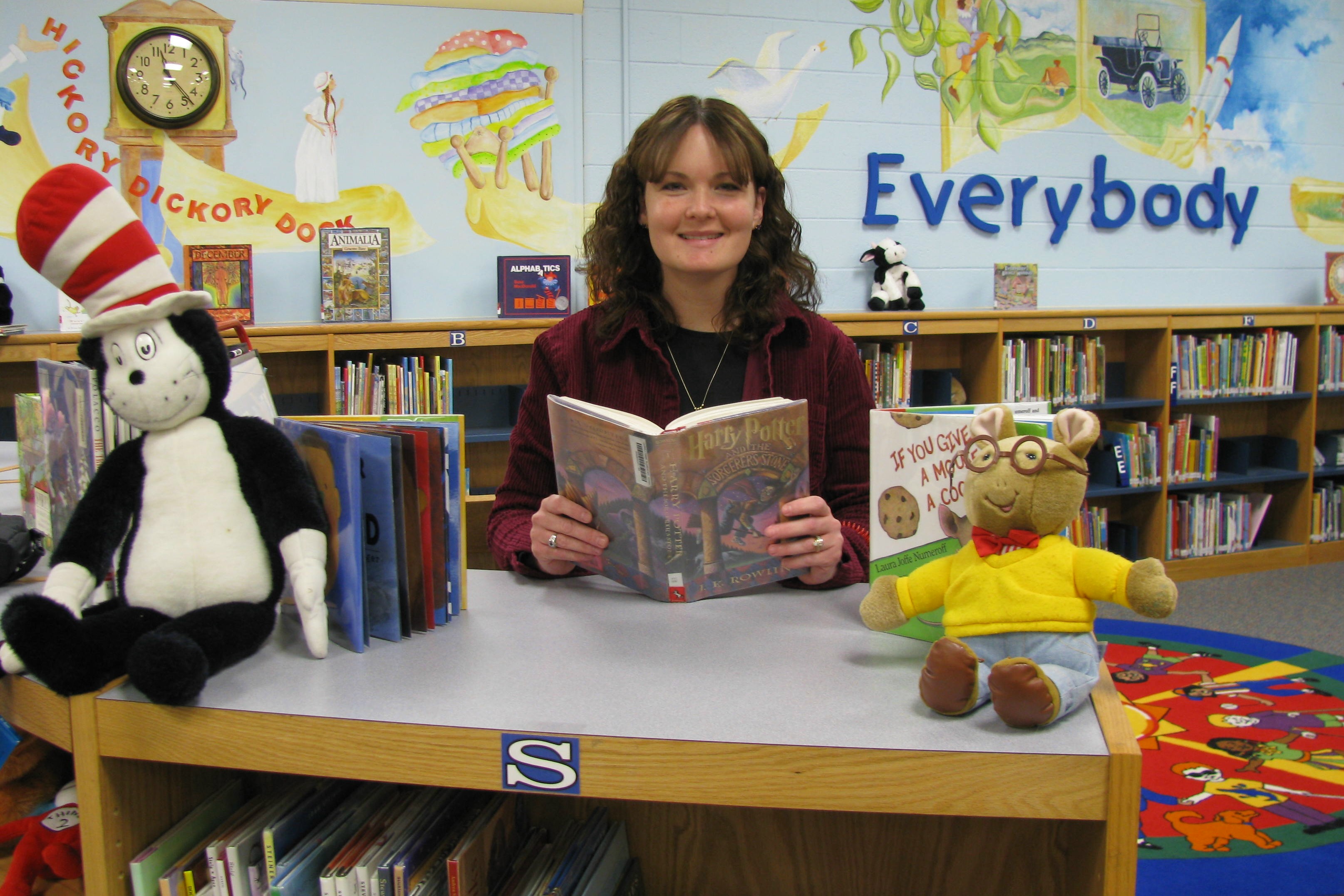
Mrs.
Wright,Media Specialist
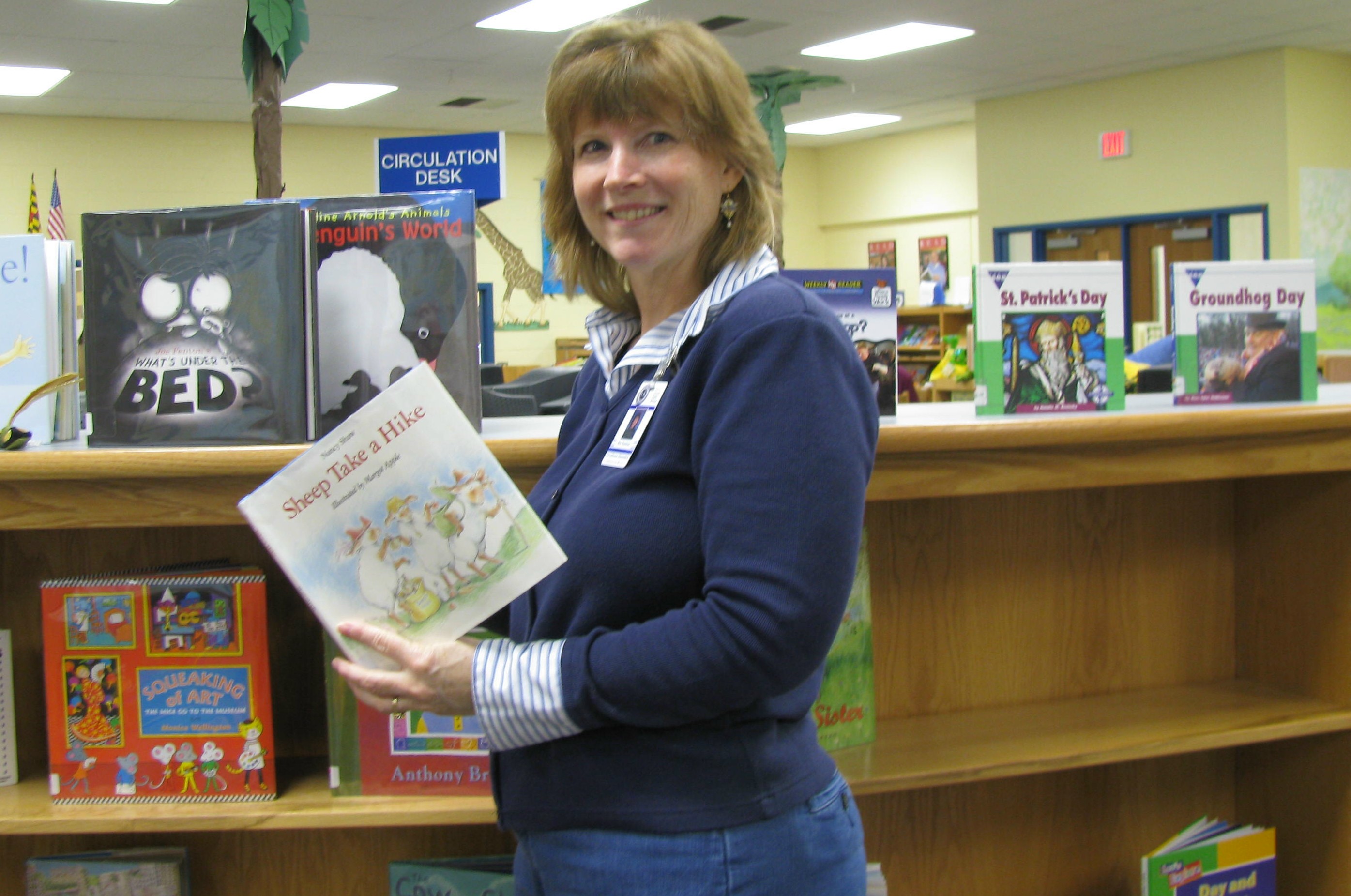
Mrs.
Kaufman, Media
Clerk
"At the moment that we persuade a child, any child, to cross that threshold, that magic threshold into a library, we change their lives forever, for the better."
--Barack Obama
- Mission
Statement
Our mission is to foster a love of reading and enthusiasm for lifelong learning while creating effective, ethical users of ideas and information through collaboration with staff and students.
- Vision
Statement
Our library is the information center of the school where we work collaboratively to support the concept of intellectual freedom and help all students achieve information literacy and a lifelong love of reading.
We believe:
-Reading for pleasure is one of life's greatest joys
-All students have the right to choose what they read
-Students blossom in an environment of developmentally appropriate materials where they have the intellectual freedom to use those materials
-Students are best served through the collaborative efforts of all school staff
-It is vital that staff collaborate to facilitate and model the effective and ethical use of information
-Information literacy is the keystone to lifelong learning
-Learning is an ongoing and lifelong journey for everyone
(Back to top)
- Intellectual
Freedom Statement
"Censorship, like charity, should begin at home; but unlike charity, it should end there."---Clare Booth Luce
Each student has the right to an effective, integrated school library program that reflects the school curriculum, cultures, and the world in general. Children are naturally curious, and should be exposed to a wide variety of subject matter, style, and genre. Only in this way can they foster a lifelong interest and love of reading and knowledge.Library materials shall be selected to help students grasp a growing awareness of our culturally diverse society. Materials dealing with controversial issues should be varied and represent many different views. The school librarian's task is to guide children to materials that will answer their questions and spark their interests. We could never presume to take the place or substitute for any child's parents. Only a parent has the right to restrict the materials their child chooses. It is the responsibility of parents to establish and communicate their selection wishes to their children and trust that they will be followed. School librarians cannot assume the role or function of a parent.School librarians are responsible for selecting a wide variety of appropriate level materials. The simple fact that a book sits on the shelf of that school library does not mean that it's message speaks to the personal beliefs of the librarian. School librarians need not endorse all materials they make available. They just need to ensure they are available to all.
"All of us can think of a book... that we hope none of our children or any other children have taken off the shelf. But if I have the right to remove that book from the shelf - that work I abhor - then you also have exactly the same right and so does everyone else. And then we have no books left on the shelf for any of us." -- Katherine Paterson
Much research for this statement was done on www.ala.org and it's various links.
Quotes used in this statement were taken from www.quotes.forbiddenlibrary.com
(Back to top)
- Selection
Policy
Selecting new materials is one of the joys of being a media specialist! We warmly welcome requests from students, staff and parents! Here are additional questions that we ask when selecting materials, including materials requested by the school community:
- Are there two or more positive reviews of the book by reputable professional journals such as School Library Journal, Horn Book and Booklist?
- Is the book appropriate for the subject areas, ages, emotional development, ability levels, learning styles and/or social development of the elementary school level child?
- Does it fit with the county curriculum and/or have a high degree of potential user appeal?
-Was it created by a reputable author, illustrator, and publisher?
-Are the storyline and illustrations high quality?
-Does it have a relevant copyright date, accurate facts, and/or fairly represents different sides of issues?(applies to nonfiction)
-Are the formatting and text features user-friendly? (i.e. index, glossary, page layout, photos, diagrams, pictures, etc.) (applies to nonfiction)
(Also see Carroll County Public Schools Selection Policy, p.5)
(Back to top)
- Student
Rights
We work hard to ensure that "all students have equitable access to library facilities, resources, and instructional programs." (ALA, 2008) That is why we do not impost age, grade-level, or reading-level restrictions on the use of resources in our media center. We do not charge fees for information in "specific formats." We do not require that children obtain permission from parents or teachers for their choices of materials. We do not have "restricted shelves" or "closed collections." We never charge late fees for overdue books and materials.
(Much research for this statement was done through the American Library Association's stand on student rights)
(Back to top)
- Plagiarism
"Plagiarism is when you use someone else's words or ideas and pass them off as your own. It's not allowed in school, college, or beyond, so it's a good idea to learn the proper way to use resources, such as websites, books, and magazines." (KidsHealth.org, 2009) In the Carroll County Public Schools student handbook, plagiarism is defined as "Deliberately presenting the ideas, works, or statements of another as one’s own, without acknowledgement of the source. Academic dishonesty." At the elementary school level, it is vital that staff work together to model, educate and enlighten our students about the ethical use of ideas and information from a variety of sources. Students must give proper credit where credit is due.
(Back to top)
Barack Obama quote obtained from http://www.ala.org/ala/mgrps/divs/alsc/initiatives/kidscampaign/kidsquotes.cfm
Created by Carol Wright
Last Updated April 18, 2009