
Annotated Bibliography of Children's Literature
Fiction
Newbery
Byars, Betsy. The Summer
of the Swans. New York: Penguin Putnam, Inc. 1970.
Sara and her brother, Charlie, live with Aunt Willie. Their mom is dead and since that event and Charlie's illness, their dad has been mostly absent from their lives. One summer's night Charlie, following the call of flying swans, wanders from the house and becomes lost. Sara will learn much about herself and life over the next hours as she searches for her lost brother.
Cleary, Beverly. Dear Mr. Henshaw. Recorded Books, LLC., 1992.
Leigh Botts’ reading of Ways to Amuse a Dog propels him to pen a letter to its author, Mr. Henshaw. Having written to ask the author some questions for a school assignment, Leigh’s reply includes some questions from Mr. Henshaw. Thus develops a correspondence and a new interest for Leigh—keeping a journal. Into the journal will go all Leigh’s feelings about his divorced dad and his dog, Bandit, now living with his dad.
Curtis, Christopher Paul.
Bud,
not Buddy. New York: Delacorte Press, 1999.
Herman E. Calloway and the Dusky Devastators of the Depression are playing gigs in Grand Rapids, Michigan. Convinced that Herman is the father he has never known, Bud, "call me Bud, not Buddy", runs away from his foster home determined to find Herman. Armed with his "rules to live by", Bud finds Herman, who turns out to be a gruff, unfriendly band leader, who is much too old to be his father. However, Bud is determined to stay with the band, whose members are much nicer than Herman. Surely, Bud has found a new home.
Cushman, Karen. The Midwife’s Apprentice. New York: HarperCollins Publishers, 1995.
Brat becomes Alyce and so gains self-esteem and a home in this story of medieval England and one of its poorest children. Using historical details about midwifery, Cushman writes a page turner as we readers follow Brat, who we first encounter sleeping in a dung heap for warmth. Apprenticing to Jane, the midwife, Brat must learn to love herself and find those who will appreciate her, before she can find a place in the world.
Fleischman, Sid. The Whipping Boy. Audiocassette. Recorded Books, Inc., 1993.
Jemmy is taken from the sewers and made to be the "whipping boy" (he takes the prince’s punishment) for the horribly behaved Prince Brat. When the Prince decides to run away, Jemmy must come too. During the next twenty-four hours they are kidnapped by Hold-your-nose-Billy and Cutwater, are befriended by Petunia and Betsy, the Bear and encounter Jemmy’s friend, the rat-catcher of the sewers. However, the King has a warrant out for Jemmy and if the Prince gives the word, Jemmy could be executed.
Lowry, Lois. The Giver.
New York: Bantam Doubleday Dell Books for Young Readers, 1993.
Jonas, a child with wisdom, will receive the collective memory of pain and joy for his community. For in this town, the citizens are satisfied, pleasant drones without emotion or creativity. The one man who retains these very human traits, The Giver, will pass them to Jonas. It will be up to Jonas to choose how best to serve his community—by remaining with them or by chancing a forbidden escape to Elsewhere.
Machlachlan, Patricia. Sarah, Plain and Tall. New York: Harper and Row, 1985.
A woman from Maine who wants to experience a new adventurous life, a father in Kansas with two orphaned children who need a mom, and a time-period in America when there were mail-order brides are the elements of this gentle story. Caleb, who doesn’t remember much about his mom except what his sister Anna can tell him, immediately takes to their new "mom". But whether, Jacob, his dad, and Anna will ever accept Sarah into their farm family are the elements that keep us caring and involved in their story.
Park, Linda Sue. A Single Shard.
New
York: Clarion Books, 2001.
In the Korea of the 1100's a young boy, Tree Ear, and Crane-man live under a bridge in summer because they are so poor. Tree Ear has studied the potters and when he finally has a chance to apprentice to Min, the great master, he is thrilled. Slowly, he becomes more skilled as a potter, himself. Journeying to bring two precious pots to the royal court , Tre Ear proves himself an honorable apprentice as he makes a mature decision on the road to Songdo.
Paterson, Katherine. Bridge to Terabithia. Recorded Books, LLC., 1996.
Two young people, Jesse Aarons, the country boy, and Leslie Burke, the city girl, become friends when Leslie enrolls at Lark Creek Elementary School. Both loners within their fifth grade class, they share a love of running, an enjoyment of Miss Edmund’s music class and the desire to protect May Belle, Jess’ younger sister. They especially like their secret retreat, Terabithia, where they are safe from the world. Only one, however, will be the final ruler of their secret kingdom, needing great maturity and strength to go forward outside of this tree-lined haven.
---.The Great Gilly Hopkins. Recorded Books, LLC., 1996.
Gilly Hopkins, foster child from Hell. So might Galadrial "Gilly" Hopkins describe herself, since she takes great pride in terrorizing those who try to get close to her. Until, that is, she comes into Mrs. Trotter’s family. For the first few weeks Gilly manages to avoid any affection for the fat, motherly, loving Mrs. Trotter, or her poetic, elderly, gentlemanly neighbor, Mr. Randolph. Especially annoying to Gilly is her abused, younger foster brother, William Ernest. So she spends lots of time wishing to rejoin her mother until she is forced to learn life’s lesson about getting what you wish for.
Peck, Richard. A Long Way
from Chicago. New York: Penguin Putnam, Inc., 1998.
Joey and Mary Alice spend summer vacations during the Depression with Grandma Dowdell in a small Illinois town. Since Grandma is not unlike gooseberries , which "are tricky things—sour to the taste and spikey with stickers", these summers are never dull. One incident finds Grandma stealing Sheriff O.B. Dickerson's rowboat and trespassing to illegally trap catfish. Another adventure involves a hat "attributed" to Abe Lincoln. Many hilarious adventures follow.
---. A Year Down Yonder. Audiocassette.Listening Library, 2000.
Mary Alice, Bootsie, her cat, and her trusty radio must spend another year* with Grandma Dowdell, This time: Grandma will teach the Legion Auxiliary ladies how to raise "real" money for Mrs. Abernathy, Mary Alice will appear in the Christmas pageant, but her best holiday treat will be waiting for her afterward, Grandma Dowdel will take on the DAR, protect her outhouse against Halloween marauders, and assist Mr. Green, a WPA artist, with his love life.
*This is the sequel to A Long Way from Chicago.
Sachar, Louis. Holes. New York: Random House Children’s Books, 1998. Black-eyed Susan Award Winner.
Holes in the hard Texas soil of a youth detention camp, holes in the ethics of the Warden who runs Camp Green Lake and holes in the narrative of a family’s curse are all elements in Stanley’s story. Since Stanley, alias Caveman, really was innocent of any crime, his prison/camp sentence had to be the fault of his "no-good-dirty-rotten-pig-stealing-great-great-grandfather," the man who brought about the Yelnats’ family curse. But curses can be broken in order for justice to triumph—even in Texas.
Taylor, Mildred D. Roll of Thunder, Hear My Cry. New York: Bantam Books, 1976.
You will hear the thunder of the heavens and the cry of your soul as Cassie Logan unfolds the story of her family’s struggle to keep their land in depression era Mississippi. Organizing a boycott of the Wallace’s general store, a white-owned business that cheats its black customers, brings the entire Logan family into direct conflict with racists who burn or hang the blacks who oppose them. As the school bus for the whites deliberately throws dust and mud onto Cassie and her brothers, so do the Logans throw pride and self-respect into the faces of those who despise them.
Nonfiction
Adler, David. America's Champion Swimmer: Gertrude Ederle. Illus. Terry Widener. San Diego: Harcourt, Inc. 2000. Black-eyed Susan Award Winner.
She almost drowned! Gertrude Ederle fell into a pond when she was a child and she couldn't swim. Her dad decided that she would learn and she went on to set twenty-seven U.S. and world records. Then, she set for herself one further challenge—to be the first woman to swim the English Channel. Gertrude Ederle was an early 1900's role model for women.
Bridges,
Ruby. Through My
Eyes. New York: Scholastic Press, 1999.
Black-eyed Susan Award
Winner.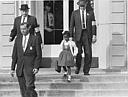
Ruby Bridges, first grader, sits alone with a caring, enlightened teacher by the name of Mrs. Henry for an entire year because she is the first black child to integrate William Frantz School in New Orleans. During that year she hears a racist scream that she wants to poison her, endures loneliness, and meets with psychiatrist, Dr. Coles, to draw pictures about her experiences. Through it all Mrs. Henry helps her learn. Ruby's story of courage adds a noble, personal tone to the vast Civil Rights Movement.
Kerby,
Mona. Amelia Earhart:
Courage in the Sky. Illus. Eileen McKeating. New York:
Franklin Watts, 1994.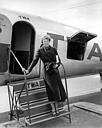
The seven-year-old girl who built a home-made roller coaster became one of America's best loved pilots. Amelia Earhart learned from her father that to do something, " 'you must be willing to pay the price.' " Sleeping in a leather jacket to make it look more worn, she was determined to look like a true pilot. A true pilot she became until her fateful attempt at an around the world flight. She and navigator, Fred Noonan, and her plane, The Electra, were last heard from near Howland Island in the Pacific Ocean. She had tried this flight, she told reporters, "Because I want to."
---. Frederick Douglas. New York: Franklin Watts, 1994.
Born in our own state of Maryland to a slave mother, Frederick Douglas was raised by his grandparents. He learned to read, though this was forbidden to a slave. When he was sent to Baltimore by his owner, Thomas Guild, he found a chance to escape. Read—to be drawn in to this boldy told biography of a man who became a passionate speaker against slavery.
Pinkney, Andrea Davis. Duke Ellington: The Piano Prince and his Orchestra. Illus. Brian Pinkney. New York: Hyperion Books, 1998. Coretta Scott King Honor.

Baseball was the young Edward Kennedy Ellington’s first love, not the piano. It took ragtime to change his mind and set his fingers to racing across the keys. It was in Harlem’s fabulous Cotton Club that fame found Duke and his band. Mood Indigo seeped its way over the radio waves as part of the Cotton Club’s live broadcast. Billy Strayhorn became Duke’s partner, "Take the ‘A’ Train" was born and the band played Carnegie Hall. Relive the heyday of jazz and of the Duke through the glorious illustrations and rhythmic text of this swinging biography.
Rappaport, Doreen. Martin's Big Words. Illus. Bryan Collier. New York: Hyperion Books, 2001. Coretta Scott King Honor.
Dr. King’s life and work shine on the pages of this glorious book. Stained-glass church windows are metaphors for all races and metaphors for looking into the life of Dr. Martin Luther King. Interspersed with Ms Rappaport’s text, Dr. King’s big words—his own words—tell the story of his life and inspire the reader: "Sooner or later, all the people of the world will have to discover a way to live together."
Yolen, Jane. A Letter from Phoenix Farm. Katonah: Richard C. Owen Publishers, Inc., 1992.
Jane Yolen narrates, while photographs taken by her son, Jason Stemple, illustrate her life as an author. Answering questions that readers most want to know, she tells us: her daily writing routine, from where she gets her ideas, where and how long she writes each day, what her tours and storytelling adventures are like. Jane’s love for her family, down to earth values and appreciation for those who read her books are apparent in every word. Fans and those new to author Jane Yolen will love learning about her.
Bartoletti, Susan Cambell. Black Potatoes: The Story of the Great Irish Famine, 1845-1850. Boston: Houghton Mifflin Co., 2001. Robert F. Sibert Informational Book Award Winner.

Through the voices of Irish people like Diarmuid O’Donovan Rossa and through detailed explanation, Bartoletti relates the horrific tragedy that was the five year potato blight and famine that killed one million people. Providing details about the assistance of the Quakers and an American Indian tribe, the Choctaw, the story includes moments of compassion. However, the cruelty of the English landlords, the evictions of families, the sheer horror of starving farm laborers and the courage of survivors produces a tragic, tearful story that is worth reading.
Warren, Andrea. Surviving Hitler: A Boy in the Nazi Death Camps. New York: HarperCollinsPublishers, 2001. Robert F. Sibert Informational Book Award Winner.
Jack Mandelbaum was in Nazi death camps for three of his teen-age years. From a life of privilege in Gdynia, Poland, he moved through the tragedy of losing his possessions, freedoom and finally, his family. Deciding that he would not be de-humanized by the Nazi's, he determined to survive. Through his ability to make friends with prisoners like Moniek and his luck in becoming a camp cook when he was near starvation, he outlived Hitler. He and Moniek were the first to walk out of Doernhau Concentration camp.
MAT 5/1/04
MATodd!@aol.com