Pop Art
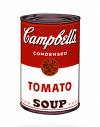
Andy Warhol’s
Campbell’s Tomato Soup (1962)
http://www.artlex.com/ArtLex/p/popart.html
Now that we have covered the beginning
of 20th Century art, it is time to look at the latter part. Pop Art, a movement that came about in the
1950s, is known for its emphasis on icons and popular culture. Pop artists would often create an exact
replica of someone or something, and then mass reproduce it. Sometimes they would add vibrant colors to
make it protrude from its ordinary subject.
Andy Warhol is one of the most notable Pop artists from the 20th
Century. He has numerous artworks that
stand today as icons of this movement.
One of his most familiar artworks is the popular Campbell’s Tomato Soup (1962), an exact replica of an everyday soup
can, which he created with oil on canvas.
In Campbell’s
Tomato Soup, Warhol takes an everyday object and turns it into a form of
art, not just through creation, but also mass production. The 20th Century was a time when
machinery was available for rendering and reproduction. Artists from this era realized this and
decided that artwork could also be reproduced.
Again, Pop Art is a visual art movement that combines fine art with
popular culture.
Although it sometimes difficult to
appreciate Pop Art, it is important to understand this movement and the role it
plays in 20th Century art. Many
art historians believe one age or movement impacts the next. It is important to note that Pop Art escalated
in a time of mass production, thus artists took advantage of project reproductions. Since Pop Art just happens to be the most
recent movement, it is important as students to learn and understand its
meaning.
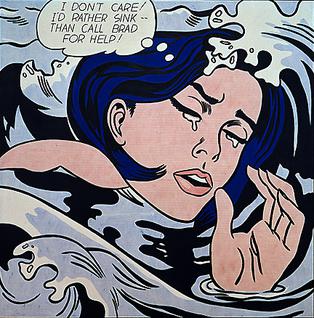
Drowning Girl by Roy Lichtenstein (1963)

Flag by Jasper Johns
(1955)
Campbell’s
Tomato Soup by
Andy Warhol (1962)
Looking
at the website, and the photographs provided, please answer the following questions:
1. Explain,
in your own words, a definition of Pop Art.
2. List three Pop Art works (both the title and
artist).
3. Drowning Girl, by Lichtenstein,
illustrates a comic. It was actually
inspired by a lead story in DC Comics.
Describe some of its comical characteristics.
4. Based
on what you have read, formulate ideas for your upcoming Pop Art project. What are some themes, objects, even people,
that represent popular culture today?
List some ideas for your next project, and be sure to keep in mind
several possibilities as you explore the Pop Art unit.