Color Wheel Practice
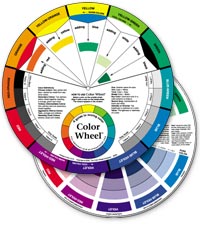
Color Wheel Chart
The color wheel is an important tool in
art. It has many purposes but the
foremost is to illustrate relationships between colors. Color wheels vary in complexity; the most
basic show as little as 12 colors whereas the more complex display actual color
sets. Regardless, the color wheel serves
as a foundation because students must master color principles in order to
understand the role color plays in artwork.
Depending on what level you are at, you
may already know that when you mix certain colors (i.e. yellow and red) you
create another color (i.e. orange). The
same concept works for the remaining colors; however, you may not be aware of all
the color sets and effects. For instance,
what are cool and warm colors, and how do these colors sets affect the viewer? Learning these sets is a skill that takes
time to master, but is important for art students to learn and appreciate.
For this assignment, you will need to
look at the websites and use them as references. These websites provide visuals on color
wheels and list many of the color concepts.
Once you feel competent you will then need to develop a color wheel
chart of your own. This chart MUST contain
the 12 basic colors, and also show three of the color sets (how you show the
color sets is up to you). The size is
also unrestricted; however, it must be large enough to use as a reference for
further projects. There is an empty
circle below to start with. Keep in mind
that you will add to this color wheel! It will serve as your reference for the duration
of this course.
Prior to creating the color wheel chart,
please answer the questions below. This
will help both you, and myself, determine whether you understand the basic
color concepts.
Websites to
visit:
http://www.colormatters.com/colortheory.html
http://emptyeasel.com/2007/03/16/using-the-color-wheel-color-theory-tips-for-artists-and-painters/
Part I
1. List
the 12 basic colors:
2. What
are the primary and secondary color sets?
3. What
are the warm and cool colors?
4.
What are the complimentary, monochromatic,
and tertiary color sets?
Part
II
Now it is time to create a color wheel chart of your own! It is best to begin with the standard circular
shape; however, feel free to extend beyond this circle and work on a separate
sheet if you need to. The circle is
merely a guideline. Remember, for this
assignment you need to list the 12 basic colors along with a minimum of 3 color
sets. You will need to think “outside
the box” as to how you show this. Be
creative!
Helpful Hint: It will probably benefit
you to divide the color wheel into 12 equal spaces
(Your Name)’s Color Wheel Chart

Follow-up
Activity:
Cut and paste your color wheel chart into your artist sketchbooks. As the course continues, there will be times
to add additional color sets and information to your chart. Again, this color wheel is your reference for
the duration of the semester so make sure you HOLD ON TO IT!