Translation
With the variety of cultures and ethnicities in our country, it
has become almost a necessity to know easy ways to translate other languages to
English or vice versa. Also, it is important
to help our students become familiar with “worlds” other than their own.
A few situations that might warrant Instructional Translations
are as follows:
1.) Multicultural Day – if you or your school
plans a Multicultural Day for the students, it would be a fun idea to teach
children how to say simple statements in foreign languages. For example, they could learn to say, “hello”,
“goodbye”, and “how are you?” in other languages as they study the culture that
the language is a part of.
2.) What if your class gets a new student from a
foreign country, who is going to live in the United States permanently or is an
exchange student? How will you make the
student feel welcome and secure? A
great way to welcome the student and to lessen the differences between the class
and the new student is to teach your class about the new student’s culture and
language BEFORE the student arrives. This
way the class will already know about the student and will not be as curious or
intimidated once the student arrives. More
lessons can be taught once the student arrives as well.
3.) Pen Pals – You’ve lined up pen pals from
other countries as communicating partners with your class, now what? To help make it easy for your students to communicate,
you can teach them how your students how to use a few simple websites so they
can write some of the letter in their pen pals’ native language. This will help your students to more easily
accept others and hopefully broaden their interests.
4.) Holidays – Most schools celebrate Christmas
and Easter, and other Christian holidays, but if you look at the calendar,
there are so many more holidays than the norm.
What about Jewish holidays?
African Holidays? Muslim
Holidays? While celebrating the
holidays that students are familiar with, you can incorporate lessons about
similar holidays celebrated by other cultures.
With other cultures, comes other languages, so a translation lesson
could be useful. Students can complete
projects that incorporate other languages into the holiday celebrations and
open a whole new world for themselves!
5.) Sometimes Reading textbooks contain stories
about other cultures. Within those
stories, there are sometimes words in foreign languages. A translation lesson would be valuable in
this situation, so that the students gain more understanding of the story and
add to their vocabulary!
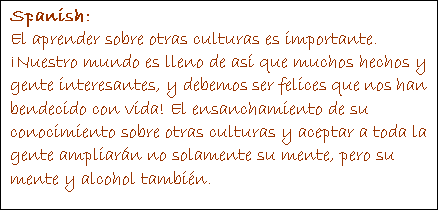
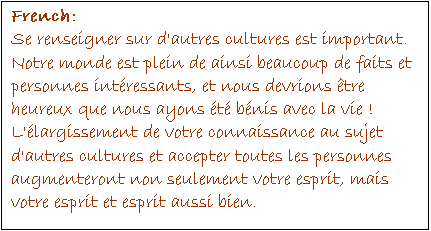
Translations:
English: Learning about other cultures is important. Our world is full of so many interesting
facts and people, and we should be happy that we have been blessed with
life! Broadening your knowledge
about other cultures and accepting all people will not only expand your mind,
but your mind and spirit as well.