Anne Elizabeth Murphy
Drop-in Assignment #5
HOLLYWOOD, POLITICS & MONEY
Introduction:
In 1941, America was still in the era of The Great Depression
and times were not always easy. People looked at the wealthy and at
Hollywood for an escape from reality. While times were hard for many
people, some still had a great deal of wealth. There were many power
struggles, jealousy and scandals amongst those trying to tell their side
of the story. An example of such is the battle between William Randolph
Hearst and a movie made by Orson Welles. Hearst was born to a rich family
and made a name for himself in journalism and also changed what was considered
to be journalism. Hearst encouraged the use of dramatic exaggerations
to sell numerous newspapers and was known for publishing fake stories. His
family is still powerful in today's publishing world. Orson Welles
was a up and coming Hollywood star--a writer, a director and an actor. He
wanted to be destined for greatness, at any cost, and was very self confident.
There is always more that what is in print or on the screen and it is important
to remember that when researching history. Look at both sides before
making a decision.
Assignment:
The link below will take
you to the PBS website and a summary of the power struggle between Hearst
and Welles. Read the summary and then answer the following questions:
1. The influence of Hearst is still seen in modern journalism. Using
examples from the text and your own knowledge support this statement.
2. William Randolph Hearst is quoted for saying:
"I thought of it, but I decided against
it. Because you can crush a man with journalism, and you can't with motion
pictures."
Do you think is argument is valid? Why or why
not? Support your answer.
3. Who do you think won the battle between
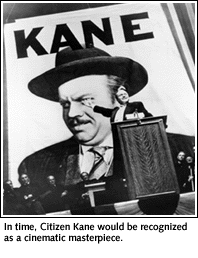
Welles and Hearst? Hearst who "squashed" the film? Or Welles who is
credited today for creating such a masterpiece?