Anne Elizabeth Murphy
Drop-in Assignment #2
NOT FOR OURSELVES ALONE
Introduction:
Before 1920, American women did not have the right
to vote regardless of social position or economic standing.
The womens' sufferage movement grew stronger in the middle of the 19th
century, thanks to Susan B. Anthony and Elizabeth Cady Statnton. There
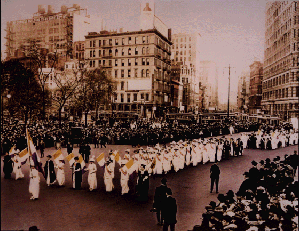
were parades (as depicted in the photo below), conventions, letters, and speeches.
There were some lobbyists who chose "more active strategies"--hunger
strikes were a popular motive. Their enduring labor led to the ratification
of the 19th amendment, in 1920, and brought a radical change into American
culture by allowing women to vote.
Assignment:
By clicking on the image below, a photograph
of a suffrage parade in New York City about 1912, you will go to the National
Archives and Records Administration website about the Womens' Sufferage movement.
The first thing I ask you to do is to click on the link
that they provide and read the 19th amendment. Since we have read the
amendment in class, it should just be a review for you. Then, you are
to return to the NARA's Womens' Sufferage page and choose one (1) of the
nine (9) documents provided. For the document you select
please answer the following questions:
1. What document did you select?
2. What type of writing is it? (speech,
editorial, letter, etc.)
3. Why do you think the document was
effectively written?
4. What evidence in the document helps
you support your reason?
5. What does the document tell you
about the life of the American woman at that time?