
| HOME |
| POLICIES | RESOURCES | RECOMMENDED READS | MCPL | LPMS DATABASES |
2008 Award Winners
Caldecott Medal
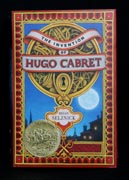
Selznick, Brian. The Invention of Hugo Cabret. New York: Scholastic Press, 2007.
Coretta Scott King Author Award
Curtis, Christopher Paul. Elijah of Buxton. New York: Scholastic Press, 2007.
Newbery Award
. 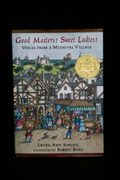
Schlitz, Laura Amy. Good Masters! Sweet Ladies! Voices from a Medieval Village. Illustrated by Robert Byrd. Cambridge, MA: Candlewick Press, 2007.
Michael L. Printz Award
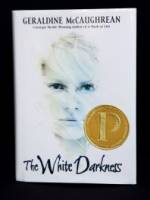
McCaughrean, Geraldine. The White Darkness. New York: HarperTempest, 2007.
The Odyssey Award

Myers, Walter Dean and Christopher. Jazz. New York: Live Oak Media, 2007.
Pura Belpre Award
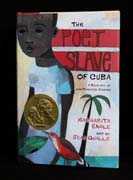
Engle, Margarita. The Poet Slave of Cuba: A Biography of John Francisco Manzano. Illustrated by Sean Qualls. New York: Henry Holt, 2006.
Sibert Award
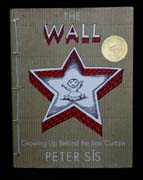
Sis, Peter. The Wall: Growing Up Behind the Iron Curtain. New York: Farrar/Frances Foster, 2007.
Sis, Peter. The Wall: Growing Up Behind the Iron Curtain. New York: Farrar/Frances Foster, 2007.
Favorite Books
Crutcher, Chris. Whale talk. New York: HarperCollins, 2001.
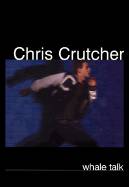
T.J. (The Tao) Jones is athletic, but does not play sports for his high school team. The superficiality of sports stars at his school has driven him away. That is until one of those sports stars picks on T.J.’s brain-damaged friend for wearing his own dead brother’s letter jacket simply because he did not earn it himself. With the help of a teacher, T.J. hatches a scheme to create a swim team that will not only allow the boy to wear the jacket, but also might earn a bunch of misfits a letter jacket of their own.
Flake, Sharon. The Skin I’m In. New York: Hyperion, 1998.
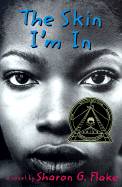
Maleeka Madison is unhappy with the color of her skin because, according to the kids at her school, she is too dark. In order to fit in, she pals around with Char, who gives Maleeka cool clothes to wear, but treats her like dirt. That is until Miss Saunders shows up and teaches Maleeka the meaning of feeling comfortable with whom she is.
Green, John. Looking for Alaska. New York: Dutton Children’s Books, 2005.
**2006 Printz Award Winner**
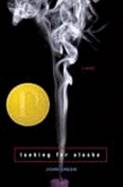
Miles “Pudge” Halter loves last words. He is tired of his life at home, so he leaves for boarding school in search of what a famous poet calls “The Great Perhaps”. Upon arrival at Culver Creek, he meets “the Colonel”, Tahumi, and the beautiful and charming Alaska Young. Throughout the year, it will be Alaska that helps Pudge find what he is searching for.
Haddix, Margaret Petersen. Among the Hidden. New York: Simon & Schuster, 1998.
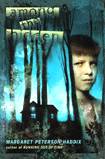
Luke is a third child. A “shadow child”. In his world, the government forbids families from having third children due to a population crisis. But now that the “barons’” homes are encroaching on Luke’s family’s property, he is no longer able to spend any time outside. He now has to stay in the attic all day and all night; that is until he sees something in a baron’s window and is determined to investigate.
Johnson, Angela. The first part last. New York: Simon & Schuster, 2003.
**2004 Coretta Scott King Author Award Winner**
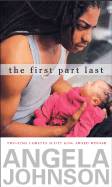
Sixteen-year-old Bobby is trying to do the right thing by raising his infant daughter without the help of his parents or the baby’s mother. He tries to balance fatherhood with his other responsibilities, as well as his want to have some fun. Realizing what is important in life will be Bobby’s ultimate struggle.
Lester, Julius. Day of Tears. New York: Hyperion, 2005.
**2006 Coretta Scott King Award Author Winner**
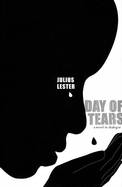
Through heart wrenching dialogues, Lester creates a fictional account of the feelings and thoughts of those involved in the largest ever slave auction in United States history. To pay off his gambling debts, Pierce Butler sells most of his slaves, even Emma, the one he promised not to sell. This alters not only Emma’s life, but also those whose life she has touched.
Lynch, Chris. Inexcusable. New York: Athenueum Books, 2005.
**2005 National Book Award Finalist**
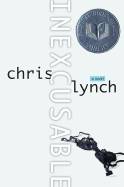
Kier Sarafian is a teenage boy with a typical life, if you don’t count the accusation of date rape. Before that fateful day, many would have seen Kier as just a loveable rascal with some minor transgressions. Although he dismisses himself as “a good guy”, Kier will have to come to grips with who he has become and what he has done.
Mackler, Carolyn. The Earth, My Butt, and Other Big Round Things. Cambridge, MA: Candlewick Press, 2003.
**2006 Black-Eyed Susan Nominee**
**2004 Printz Honor Book**
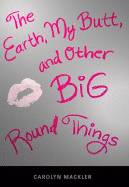
Virginia Shreves thinks she’s fat. She even has created a “Fat Girl Code of Conduct” to follow. Compared to her perfect family, Virginia never feels like she’s able to measure up, not only physically, but also intellectually and emotionally. That is until a phone call changes the image of the family she thought she knew.
Mercado, Nancy, ed. Every Man for Himself: Ten Short Stories about Being a Guy. New York: Dial Books, 2005.
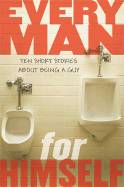
A collection of humorous and heartwarming short stories written for young men by ten remarkable male writers. The stories are true to life, about men trying to figure it all out while working with what life has given them.
Nelson, Marilyn. A Wreath for Emmett Till. Illustrated by Philippe Lardy. Boston: Houghton Mifflin Co., 2005.
**2006 Printz Medal Honor Book**
**2006 Coretta Scott King Author Honor**
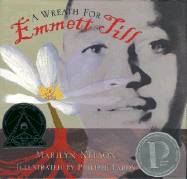
In 1955, fourteen-year-old Emmett Louis Till was lynched for supposedly whistling at a white woman in Mississippi. His horrific death shocked the nation into facing the issue of racism head on. In a series of interlinked sonnets, this story’s beginning, its middle, and its tragic end is told.
Perkins, Lynne Rae. All Alone in the Universe. New York: Greenwillow Books, 1999.
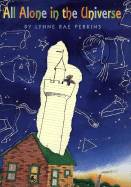
Since third grade, Debbie and Maureen have been best friends. But now that they are in middle school, things have changed. Maureen has become friends with Glenna Flaiber and Debbie discovers what it means to be alone. She has to learn to deal with being on her own, but also how to make new friends, even ones that are different from her.
Perkins, Lynne Rae. Criss Cross. New York: Greenwillow Books, 2005.
**2006 Newbery Award Winner**
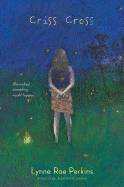
In the sequel to All Alone in the Universe, Debbie and her friends spend the spring and summer blossoming into young adults and trying to find themselves. Hector discovers the joy of creating music, while Debbie stumbles across her first crush, and Lenny finds he has feelings for Debbie. Throughout, their journeys continue to cross unexpectedly.
Stein, Tammar. Light Years. New York: Alfred A. Knopf, 2005.

After the tragic death of her boyfriend, twenty-year-old Maya Laor leaves Israel to study astronomy at the University of Virginia. In Virginia, she has to face a whole new language and culture, and American ways. Just when she thinks she’s outrun the guilt, violence, and memories of her previous life, the pressures of this new life force her to come to grips with her violent past.
Westerfeld, Scott. Uglies. New York: Simon Pulse, 2005.
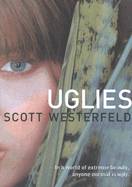
Tally cannot wait until she is sixteen. Where she lives, turning sixteen equals turning pretty. And, who doesn’t want to be pretty? When you’re pretty, you get all kinds of privileges that Uglies don’t get, including staying out to party until the wee hours. But, then Tally meets Shay, who has a different idea for her sixteenth birthday; to run away and risk everything. Will Tally go as well?
Zevin, Gabrielle. Elsewhere. New York: Farrar, Straus, and Giroux, 2005.
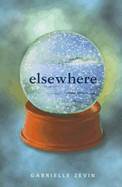
In Elsewhere, the sun is always shining, there is no crime, and no one gets older. It sounds great to everyone but fifteen-year-old Liz Hall. That’s because Elsewhere is where you go after you die. But Liz doesn’t want to be dead, and although she meets her grandmother for the first time and falls in love, she longs to be back with her family and will stop at nothing to see them again.