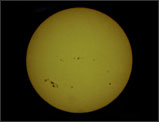
The sun, the center of our
solar system
Today
we are going to start a unit on our solar system. As you probably know, our solar system is made up of the sun, and
the nine planets that orbit the sun. The
solar system also contains other celestial objects that are found within its
boundaries, such as moons. This unit
should be fun and interesting, and to kick things off we are going to go on a virtual 3
dimensional tour of the solar system! We are
going to do this courtesy of a site on the World Wide Web maintained by the BBC
– the British Broadcasting System. The
BBC is like our TV networks ABC, CBS, etc., except it is funded and run by the
British Government.
Before we head into
outer space, here are some questions to be answered during your visit. Please read these prior to starting your
journey:
1.
To start on your journey, click on the button marked
“Blast-off to the solar system.” Use your mouse to travel around the
solar system finding each planet and the sun.
You point the arrow in the direction you want to go and click the left
mouse button to speed up your journey. What
do you notice about the distances between each celestial body?
2.
Now spend some time visiting each of these planets: Mercury, Mars,
and Saturn. Travel around using your
mouse, and when you see a planet, point your arrow toward it in order to get to
it. Don’t move too fast, or you will fly
right through it! Acquire each planet
as a target using your mouse. When you
get close enough to it, the program will automatically stop you and tell you
the planet has been acquired. If you
have trouble finding a planet, you can click on the “Solar Chart” button located
in the lower left hand corner of the screen.
This will place a chart containing all the planets over the screen, and clicking
on the planet you wish to visit will take you right to it. Find out more about each planet, including
watching the video log for each. (Click
on video log to load each video, and then click on the picture that appears in
the box to start each video.) For
each planet, please take notes on what they are made of, what their surface
conditions are like, including temperature, and what the length of their day is. After taking notes, please write a brief essay
comparing and contrasting the planets based on these characteristics. (Click on “autopilot” to disengage from
orbiting a planet and return to traveling in space.)
3.
Now visit the Sun, and find out more about it, including
listening to its video log. How does
it differ from the planets you visited?
4.
Having visited three planets and the sun, which would you most
like to visit for real, and why?
I have printed out these questions on the sheet of paper that I have given you. Please use this paper to answer each of the above questions.
Having these questions
firmly in mind:
strap on your seatbelts, and let’s head to the sky!