Patricia Jimenez
SLM 521 – Web Drop #3
Vocal Music of the Baroque Era
This supplementary activity explores and compares the three main genres of Baroque
vocal music – opera, cantata, and oratorio.
We will concentrate on three main composers: Purcell, Bach, and Handel.

Henry Purcell (1659-1695)
wrote the first great English opera,
Dido and
Aeneas. He was the organist at Westminster Abbey and composed many
theatrical pieces. His pieces are recognized for his lyrical melodies and mastery
of counterpoint. Purcell often employed the device of the ground bass, in which
a bass melody is repeated while the upper parts pursue variations. Purcell’s
English music used elements of French and
Italian innovation.
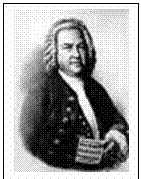
Johann Sebastian Bach (1685-1750) was born into a German family of musicians. He became famous as an organ virtuoso. As a devout Lutheran, he believed that music must serve to glorify God. Rather than creating new forms, Bach’s education, practice, and music mastery of counterpoint raised the standards of compositional performance. His sacred vocal works include over two hundred cantatas. He wrote over twenty secular cantatas as well as a plethora of orchestral, keyboard, and organ compositions.
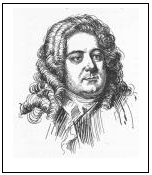
George Friderick Handel (1685-1759) was born in
Visit Baroque Music (http://www.baroquemusic.org/index.html). This site explains the characteristics of Baroque music, offers portraits of major composers with biographies, and presents a Baroque music sampler. There you will collect data to complete the following chart on the similarities and differences of the Baroque opera, cantata, and oratorio.
Print out your work and save it in your music folder for class discussion.
[http://www.baroquemusic.org/index.html last visited
|
|
OPERA Purcell’s Dido and Aeneas |
CANTATA Bach’s Cantata 140: Wachet Auf |
ORATORIO Handel’s Messiah |
|
ELEMENTS |
* * * |
* * * |
* * * |
|
Place Performed church, theater, court, etc. |
|
|
|
|
Audience |
|
|
|
|
Instruments |
|
|
|
|
Vocalists Soloists Chorus Ensembles |
|
|
|
|
Text secular/ sacred language subject matter possible source |
|
|
|
|
Melody range character polyphony counterpoint |
|
|
|
|
Harmony consonant, dissonant drone ground bass modulation |
|
|
|
|
Dynamic Changes abrupt or swelling |
|
|
|
|
Form Repetition Contrast Variation Imitation |
|
|
|
|
Prelude |
|
|
|
|
Interlude |
|
|
|
|
Ornamentation Melissmas Improvisation Trills |
|
|
|
* Other notes: