
And His Laws of

Introduction
In 1665 it is believed that a
young scientist was sitting under an apple tree pondering the amazing universe
around him when all of a sudden an apple fell from the tree and knocked him on
the head. It is thought that when this
young scientist was knocked on the head by the apple he came to discover the laws
that describe the universe.
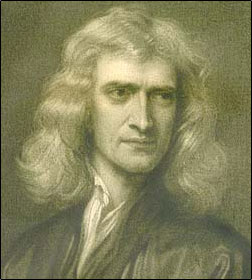
Sir Isaac
Newton
His name was Isaac Newton and he
went on to discover many great things in physics, as well as mathematics,
chemistry and a wide variety of other subjects.
He became Sir Isaac Newton in 1705 and is known all over the world for
the many great theories he developed in his life. Three of these theories that he is probably
most commonly known for (since they have his name in them) are
Activity
The goal of this activity is to
introduce the students to Sir Isaac Newton and his three laws of motion. The students will read about and observe
examples of these laws and then will apply their understanding of them in a
variety of different tasks. To access
the different websites that will give a description and tutorial of each law
simply click on the picture below the literal interpretation of each law.
The
first of these laws simply states:
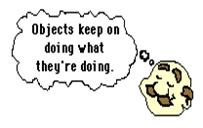
An
object at rest will remain at rest and an object in motion will continue its
motion unless acted upon by some external force
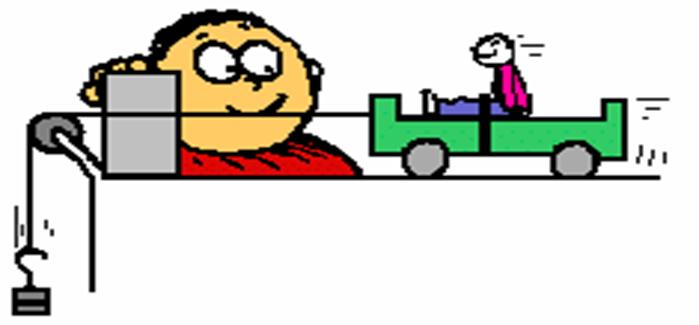
The net external force
that is acting upon an object is equal to its mass multiplied by its
acceleration
Force = mass * acceleration
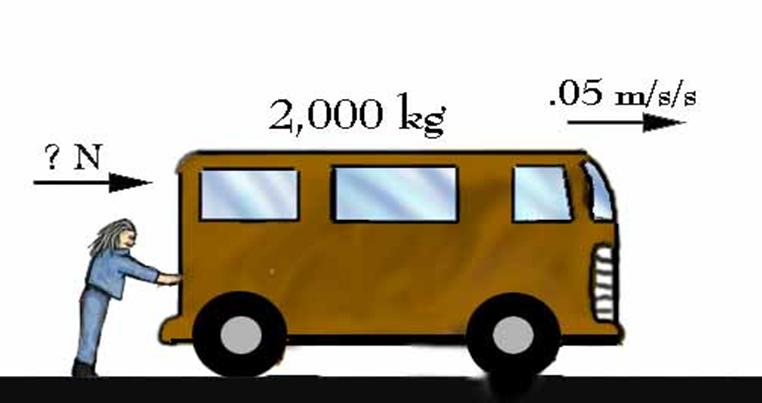
The
third and final law of motion as determined by
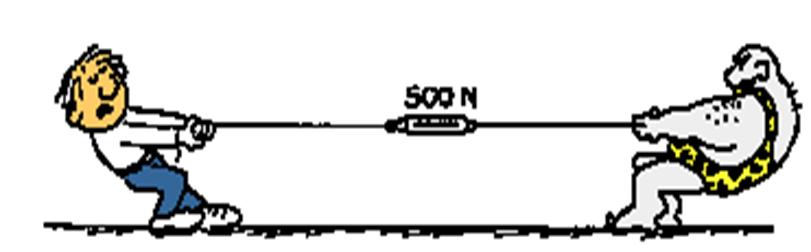
For every force there is
an equal and opposite force
Post Reading Assignments
Now that we have a basic
understanding of Sir Isaac Newton and his laws of motion it is important to see
how these laws apply to the world around us.
We see these laws at work every single day. Whether it’s on the bus on the way to school
or during football practice after school, we are experiencing
So, now that we know
The last assignment is a little
more involved, but it can be just as fun.
For this assignment we are going to build something that moves, but
because we are weird and crazy physicists we are not going to use normal
parts. Instead, we are going to use a
mousetrap in order to power our moving device.
The goal of this assignment is to build a contraption around a mousetrap
that will cause it to move. Along with
the contraption you will need to provide a written explanation of why you built
it the way you did.
Evaluation
Problems
Each
problem will be worth three points
1st
point: Setting up the problem, which includes drawing a picture and writing
down all known and unknown values
2nd
point: Working through the problem using relevant equations
3rd
point: Coming up with the correct answer
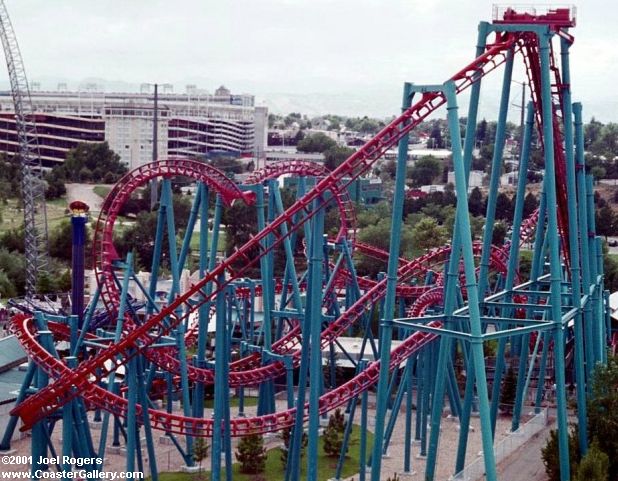
Roller Coaster
The
grade for this assignment is based on completion. Once you have found values that allow for the
completion of the roller coaster I will check your work and mark you as
completed.
Mouse Trap
There
are two parts to this assignment, the actual contraption and the written
explanation. Each will be worth
twenty-five points for a total of fifty points for the assignment. The points for the contraption are based
purely on completion upon race day, although bonus points will be awarded for
those that travel the farthest. The
paper will be graded using the following rubric scale:
|
|
One |
Three |
Five |
|
Completion
of paper/appearance |
|
|
|
|
Description
of contraption |
|
|
|
|
Rationale
for design |
|
|
|
|
Support
from reading or text for design |
|
|
|
|
Grammar |
|
|
|
Conclusion
In the centuries following Sir
Isaac Newton and his laws of motion we have come to realize that the universe
is much more complicated and involves a great deal more of information to
describe everything, but
Links
Click
on the following picture to link you to a list of great webquest
activities for a variety of topics.