Jayme Cilente
SLM 521
Summer 2006
Body Mass
Index

http://www.cdc.gov/nccdphp/dnpa/bmi/childrens_BMI/about_childrens_BMI.htm
Body mass index, or BMI, is a new term to most people. However, it is
the measurement of choice for many physicians and researchers studying obesity.
BMI uses a mathematical formula that takes into accounts both a person's height
and weight. BMI equals a person's weight in kilograms divided by height in
meters squared. (BMI=kg/m2).
In this unit you will learn about BMI in youth and be able to determine your
own BMI.
Visit the Center for Disease Control and Prevention’s website
about BMI for children and teens by clicking on the picture above.
Complete the following activities:
- Make a
chart that includes the weight status categories and percentile ranges for
BMI in children and teens.
- What are
the differences between BMI for children and teens and adults?
- Determine
your BMI by using the BMI Calculator.
- Using the chart you made earlier,
determine your weight status category and percentile range.
- Compare the
result you got by the BMI Calculator to the BMI in the following table:
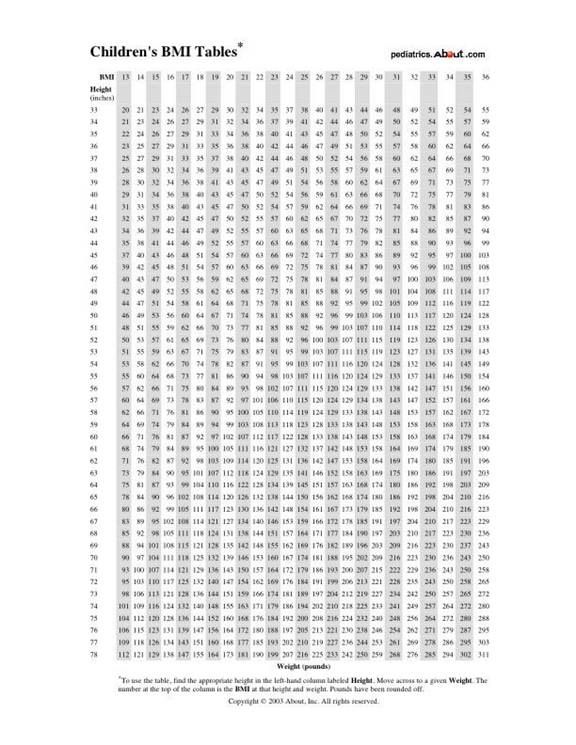
http://www.pediatrics.about.com/.../
n_bmi_tables.htm