Kate Benchoff’s Index Page
Course Assignments:
Web Bibliography – A comprehensive look at The Great Gatsby
(http://www2.mcdaniel.edu/slm/student/benchoffk/webbib.htm)
Check
out this collection of websites on all things “Gatsby” – the historical
context, more about the author, and some character analysis.

Search
Engines - What to use and when to use
it (http://www2.mcdaniel.edu/slm/student/benchoffk/sengines.htm)
This
page offers information and advice on where, when, and how to use the various
search engines available to the world.
Course
Module One – A comprehensive course activity to introduce students to
primary sources on the web. (http://www2.mcdaniel.edu/slm/student/benchoffk/moduleone.htm)
Electives:
Lesson
Plans on the Web – A helpful index to websites with ready-to-use English
lesson plans (http://www2.mcdaniel.edu/slm/student/benchoffk/lessonplans.htm)
Visit this page to
access the top five sites for creative and easily accessed high school English
plans.
Free Teacher
Handouts – This top-ten list will guide you on your quest for quick, easy
handouts for the high school English teacher.
These sites provide everything form grammar practice to reading
comprehension to graphic organizers – sure to make your job at least a little
easier.  (http://www2.mcdaniel.edu/slm/student/benchoffk/handout.htm)
 Making a
Great Media Center Site – Here is a quick list of helpful tips when
creating a school library website. This
page will offer specific pointers about what to include when you are designing
a school library website and how to include it.
(http://www2.mcdaniel.edu/slm/student/benchoffk/schoolpage.htm)
Making a
Great Media Center Site – Here is a quick list of helpful tips when
creating a school library website. This
page will offer specific pointers about what to include when you are designing
a school library website and how to include it.
(http://www2.mcdaniel.edu/slm/student/benchoffk/schoolpage.htm)
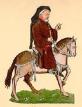
The Life and
Times of Geoffrey Chaucer – Complete, reliable information about Medieval
Europe, as discovered through audio and media clips.
Use this site when
introducing students to The Canterbury Tales in order to historically
contextualize the work. (http://www2.mcdaniel.edu/slm/student/benchoffk/audio.htm)
Internet
Filtering: Protecting Students AND Their
Freedom – A brief table of just a few of the many pros and cons to internet
filtering, along with the reflections on each from an educator’s
perspective. Namely, mine. (http://www2.mcdaniel.edu/slm/student/benchoffk/filtering.htm)
Web
Drop-Ins – The
first three lessons center on The Crucible, McCarthyism, and Arthur
Miller. The final two are activities
related to The Great Gatsby.
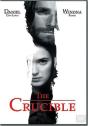 Web Drop-In
#1: McCarthyism and The Crucible
(http://www2.mcdaniel.edu/slm/student/benchoffk/dropinone.htm)
Web Drop-In
#1: McCarthyism and The Crucible
(http://www2.mcdaniel.edu/slm/student/benchoffk/dropinone.htm)
For this activity,
students will learn more about McCarthyism and how it influenced Arthur Miller
to write The Crucible.
Web Drop-In
#2:
Arthur
Miller (http://www2.mcdaniel.edu/slm/student/benchoffk/dropintwo.htm)
Students will
explore the PBS site dedicated to The Crucible author and his life. Afterwards, they will compose a brief
question and answer guide to Arthur Miller, including questions about his
background and influences.
Web
Drop-In #3: Experience the Salem
Witch Trials (http://www2.mcdaniel.edu/slm/student/benchoffk/dropinthree.htm)
Students will have
the opportunity to experience the atmosphere and tension of life during the
Salem Witch Trials. When they are
finished, they will be reflecting on both their personal reaction and the
overall experience.
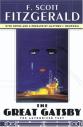 Web
Drop-In #4: The Great Gatsby
Film Analysis (http://www2.mcdaniel.edu/slm/student/benchoffk/dropinfour.htm)
Web
Drop-In #4: The Great Gatsby
Film Analysis (http://www2.mcdaniel.edu/slm/student/benchoffk/dropinfour.htm)
In order to better
understand The Great Gatsby, students will compare critical reviews of the film
starring Robert Redford. They will
develop their own critical opinion of both the film and the film critics.
Web
Drop-In #5: The Culture of the
1920’s (http://www2.mcdaniel.edu/slm/student/benchoffk/dropinfive.htm)
Students will
analyze the culture of the 1920’s and how it relates to the characters from The
Great Gatsby. In addition, they will
be designing or choosing and explaining symbols to represent values from the
decade.