Stacia Linz
SLM521
Dropin #5
British Rhyming Slang
This Web Dropin is designed to explore British Rhyming Slang and as an introductory activity for Anthony Burgess’s novel, A Clockwork Orange. It is geared toward AP English Grade 12

British
Rhyming Slang is a
particular form of slang.
Slang, as we’ve
discussed, is informal language (words + expressions) within the standard
system of a dialect or language.
British Rhyming
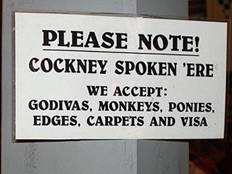
slang (so named because it’s thought to have originated within the Cockney
dialect)is very clever, lots of fun…and a little bit
complicated to get the hang of.
Here is how
the structure works:
In British
Rhyming Slang, a pair of words (or phrase) replaces and represents a single
word, and where the second in the pair of words rhymes with the word in
question:
So, “phone” is
replaced with “dog and bone” :
I am on the dog and bone-- [telephone].
What makes
matters more complicated is that the second word in the new pair is then
frequently dropped altogether: I am on the dog --[drop “and bone, just “dog”]
This means that
without the rhyme to figure out the association to the original word
[bone/phone], it becomes difficult to figure out the rhyming phrase, and thus
word it stands for. Once you get the hang of it, it gets a lot faster!
Here are some
classic and currently common examples:
Adam and Eve Believe
Apples and
Pears Stairs
Bees and Honey Money
Billy Lids Kids
Chevy Chase Face
China Plate Mate (friend)
Trouble and Strife Wife
Example:
Potatoes in the mold = Cold
It is easier to
figure this out from context, especially when the final rhyme of the
substitution phrase is dropped, and it’s easier in face-to-face conversation,
than in writing. Why do you think this is?
This exercise is
meant to deepen your understanding of wordplay, of slang, and to keep your
brain supple as we are reading Anthony Burgess’s A Clockwork Orange,
which is narrated in a unique form of slang partially created by the author
himself (the novel’s title actually comes from an old Cockney expression).
The language
Burgess created is called NASDAT, and it is a complex blend of Slavic
languages, rhyming slang, and according to the doctor’s character “a bit of gypsy talk, too.”
I expect you to continue to be mature in this
assignment, and as we explore this subject matter and this novel. British
Rhyming Slang is a style and method of wordplay you need to know to be
culturally conversant, and this is an important novel, but many of its
components and the novel’s themes are sophisticated.
YOUR ASSIGNMENT:
1.
Read more about British Rhyming Slang.
2.
Peruse at some
translators/dictionaries of BRS:
Cockney Rhyming Slang
Translator
Webster's
Cockney Rhyming Slang Dictionary
3.
Look at the NADSAT translator, and
try to become familiar with some of the terms Burgess is using in the novel,
and that we encountered in Chapter 1.
4.
In your Writer’s Log: please
write a short scene using three examples of British Rhyming Slang, and three
pieces of NADSAT. You do not have to use the characters from A Clockwork
Orange, or write in screenplay/dialogue, but you must set up the scene so that
we can understand what you are saying from context.
- Be prepared to read your scene aloud next week. This assignment is worth 100 points.