Catherine
Johnson
Web Dropin #3
22
October 2005
5 Short Activities – The
Sections of the Symphony Orchestra
Activity
#1
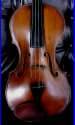
Strings – This section
is known as the “heart of the orchestra.”
Without strings, the remaining instruments would make up what we call a
band. The strings are all bowed
instruments, and sit in front of the other sections, closest to the audience.
Explore this website from the San
Francisco Symphony: http://www.sfskids.org/templates/instorchframe.asp?pageid=3
Give me 2 facts about each
instrument, in your own words.
Violin
Viola
Cello
Bass
If you had the opportunity to
learn a string instrument, which one do you think you would choose and why?
~ ~ ~ ~ ~ ~ ~ ~ ~ ~ ~ ~ ~ ~ ~ ~ ~ ~ ~ ~ ~
Activity
#2
Woodwinds – Long ago these
instruments used to be made of only wood.
Nowadays they are made of wood, metal, or both. They get their sound with wind, or blowing
into them. Visit the same webpage, http://www.sfskids.org/templates/instorchframe.asp?pageid=3,
and answer the following questions.
Click on each instrument and
listen to a sample of the way it sounds.
What instrument’s sound are you most attracted to?
Questions:
1) What instrument is closest to
the flute and has the highest range of all woodwind instruments?
2) What instrument can play the
lowest notes in the orchestra? (Hint, Click
on the link that says “More Woodwinds!”
3) Why are some of the instruments
physically folded in half?
~ ~ ~ ~ ~ ~ ~ ~ ~ ~ ~ ~ ~ ~ ~ ~ ~ ~ ~ ~ ~
Activity
#3
Brass
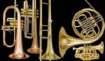
Read the website’s brass section, and
enjoy listening to demonstrations of the brass sounds. This is the loudest section of the orchestra,
so this should be fun!
For this activity I want you to compare
and contrast the two brass instruments below.
Fill out the chart below appropriately.
I’ll fill out an example to get you started.
_French Horn_ How
are they Similar? Trumpet
|
The French Horn is in the shape
of a circle, and unfolded, it would be about 17 feet long! Clearly this one is a bit longer! |
They both have 3 valves. |
Long, slender tube that would be
6 ½ feet if stretched out. |
~ ~ ~ ~ ~ ~ ~ ~ ~ ~ ~ ~ ~ ~ ~ ~ ~ ~ ~ ~ ~
Activity#4
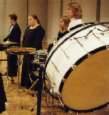
Percussion – There are so many different percussion
instruments that it is sometimes difficult for a percussionist to master all of
them. On the website there are 14, including
piano, which is also a percussion instrument. Today
we are going to compare two websites, designed for kids, to see which one you
think is more useful and informative.
The
Write a short paragraph describing
which site has the most useful information, and what you think of each. Which one would you use if you had to create
a project on the percussion section?
Some things to consider:
Which site has more percussion
instruments? Which site has a better
listening section?
~ ~ ~ ~ ~ ~ ~ ~ ~ ~ ~ ~ ~ ~ ~ ~ ~ ~ ~ ~ ~
Activity #5
The Conductor, or Maestro, or
Music Director!
We have to go to a different site
to get information about the conductor, since technically he isn’t a section of
the orchestra. But his or her job is
still very, very important!


Visit this site: Region15’s Concert
Etiquette (http://www.region15.org/music/etiquette.html). The first question about the conductor is the
one you should be paying attention to.
Also visit “The Art of Conducting”
(http://www.jcarreras.com/spotlight/focus010.htm)
Lastly, together in class I will
have everyone visit “The Basic
Patterns” of Conducting (http://www.theconcertband.com/conducting_the_basic_patterns.htm)
and together we will go over how a conductor conducts in the most basic
patterns (in 1, 2, 3, and 4). I will
stop class to go over this.
Your assignment:
List 10 Things a Conductor has to
do to be a good conductor.
1)
2)
3)
4)
5)
6)
7)
8)
9)
10)
~ ~ ~ ~ ~ ~ ~ ~ ~ ~ ~ ~ ~ ~ ~ ~ ~ ~ ~ ~ ~